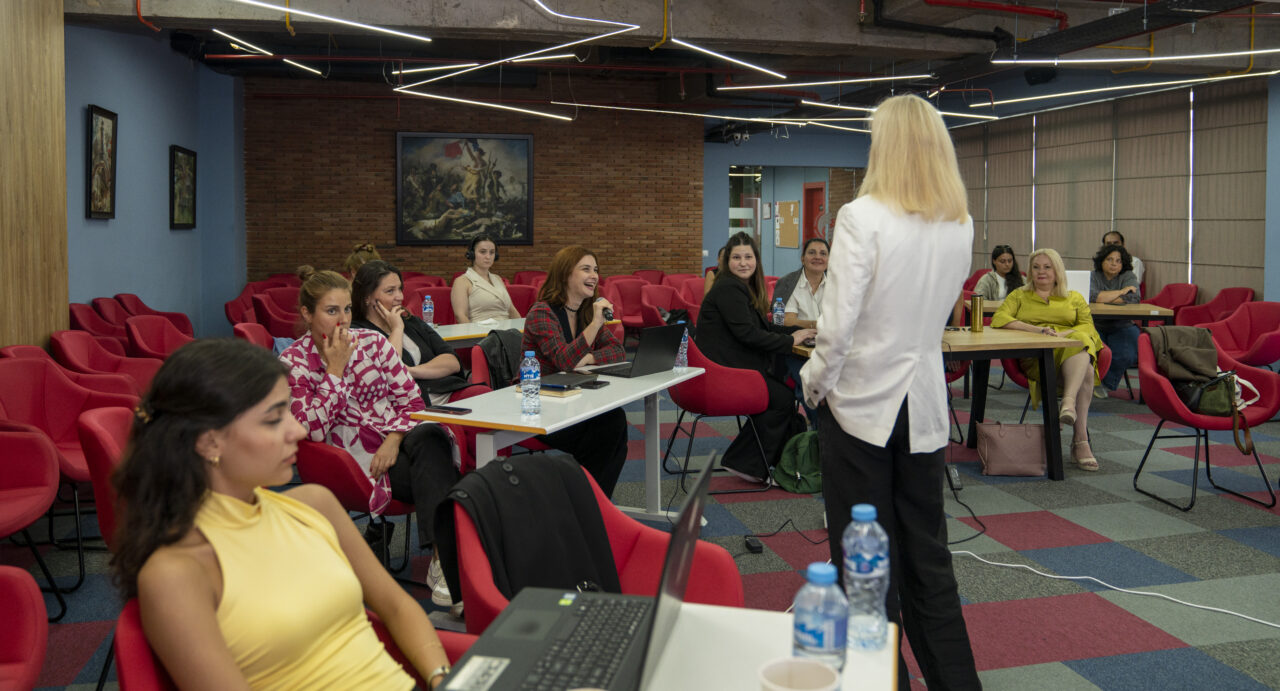
The morning sessions explored the critical path of collection development, guiding participants through timelines for designing, presenting seasonal collections, and planning production in alignment with trade fairs. SMEs learned how to structure their product development cycles efficiently, ensuring readiness for B2B buyers and international market demands.
Next, the training offered detailed guidance on pricing strategies, margins, and cost structures for export. Attendees gained insights into setting profitable prices while understanding wholesale and retail margins expected by European buyers, enhancing their ability to make financially sustainable decisions.
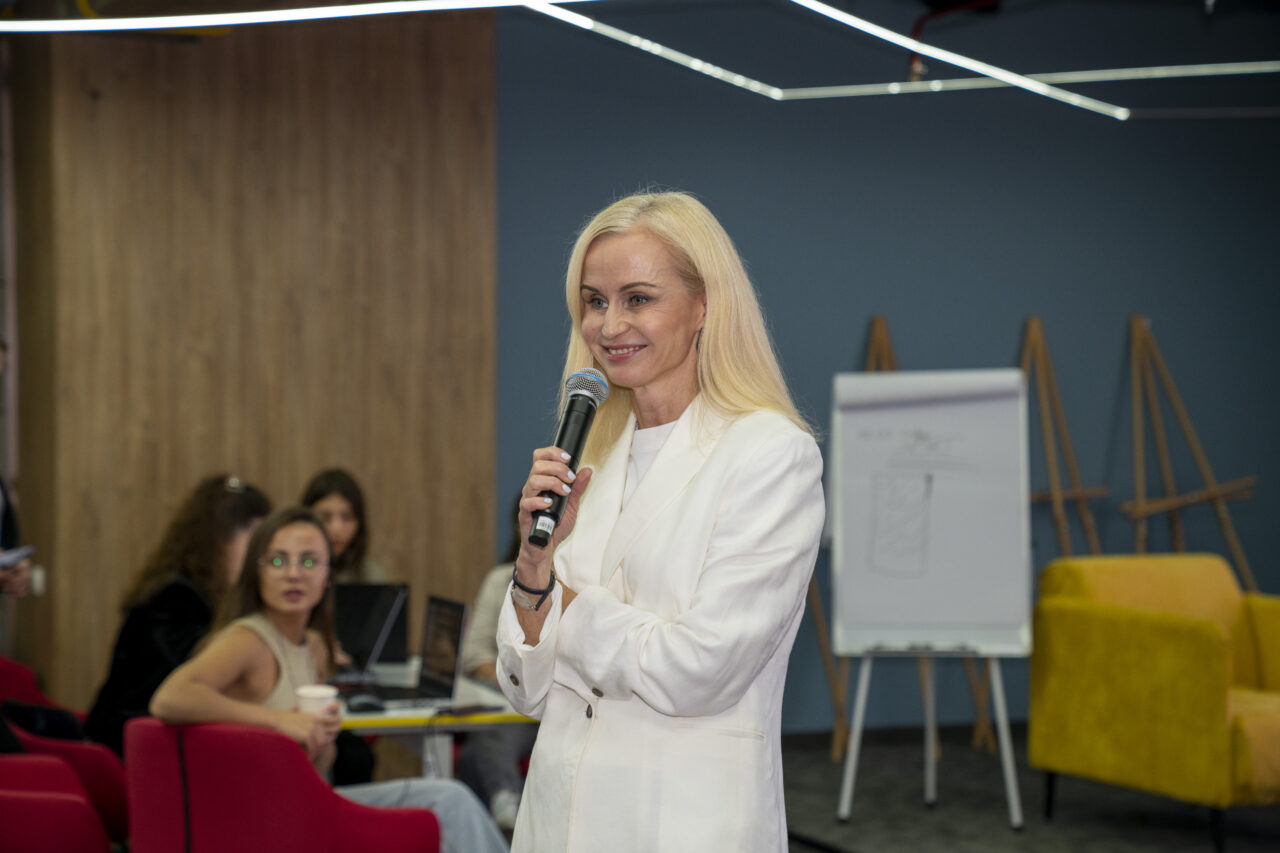
The final session focused on buyer expectations and brand presentation. Participants prepared concise brand pitches and received constructive feedback on visuals, documentation, and overall product readiness, strengthening their confidence in approaching international buyers.
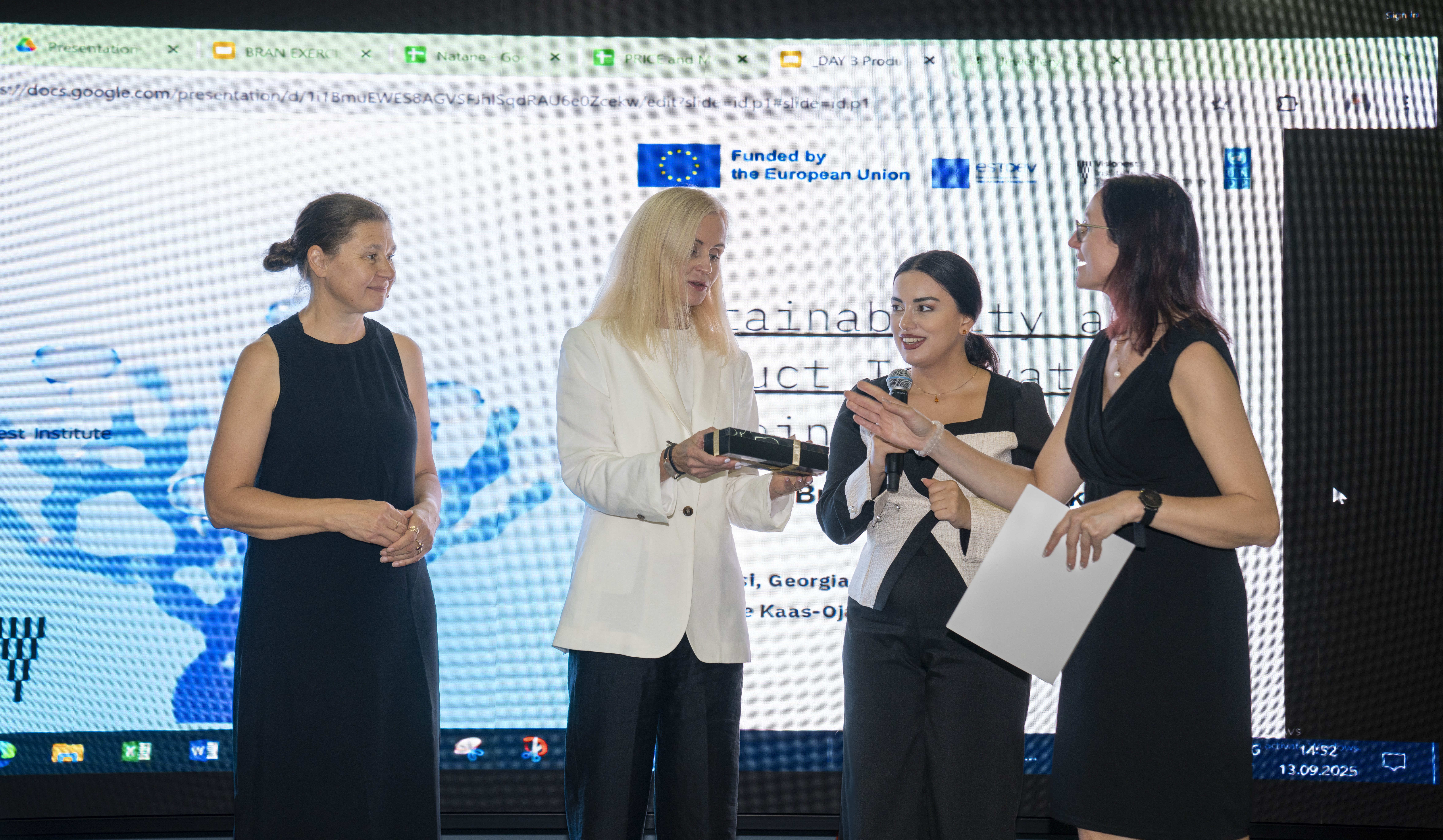
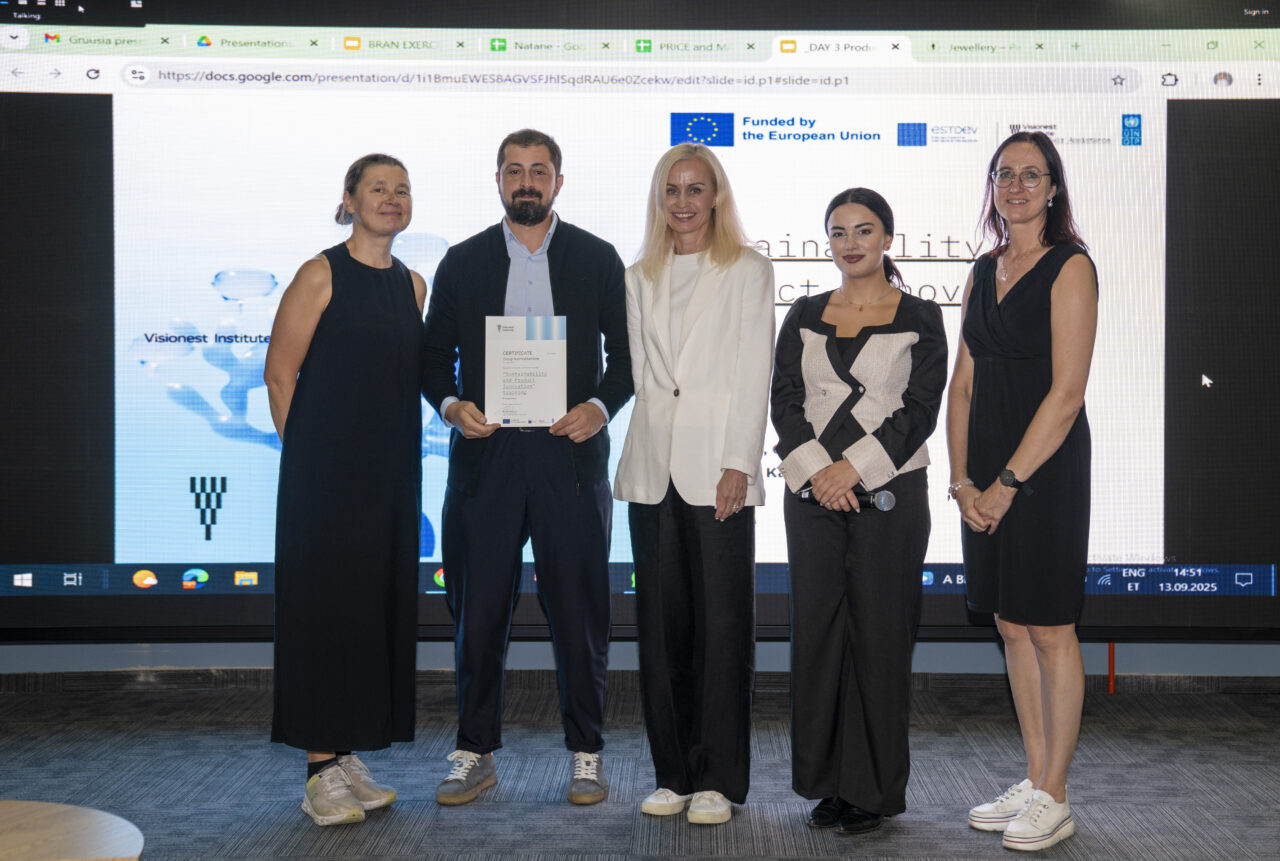
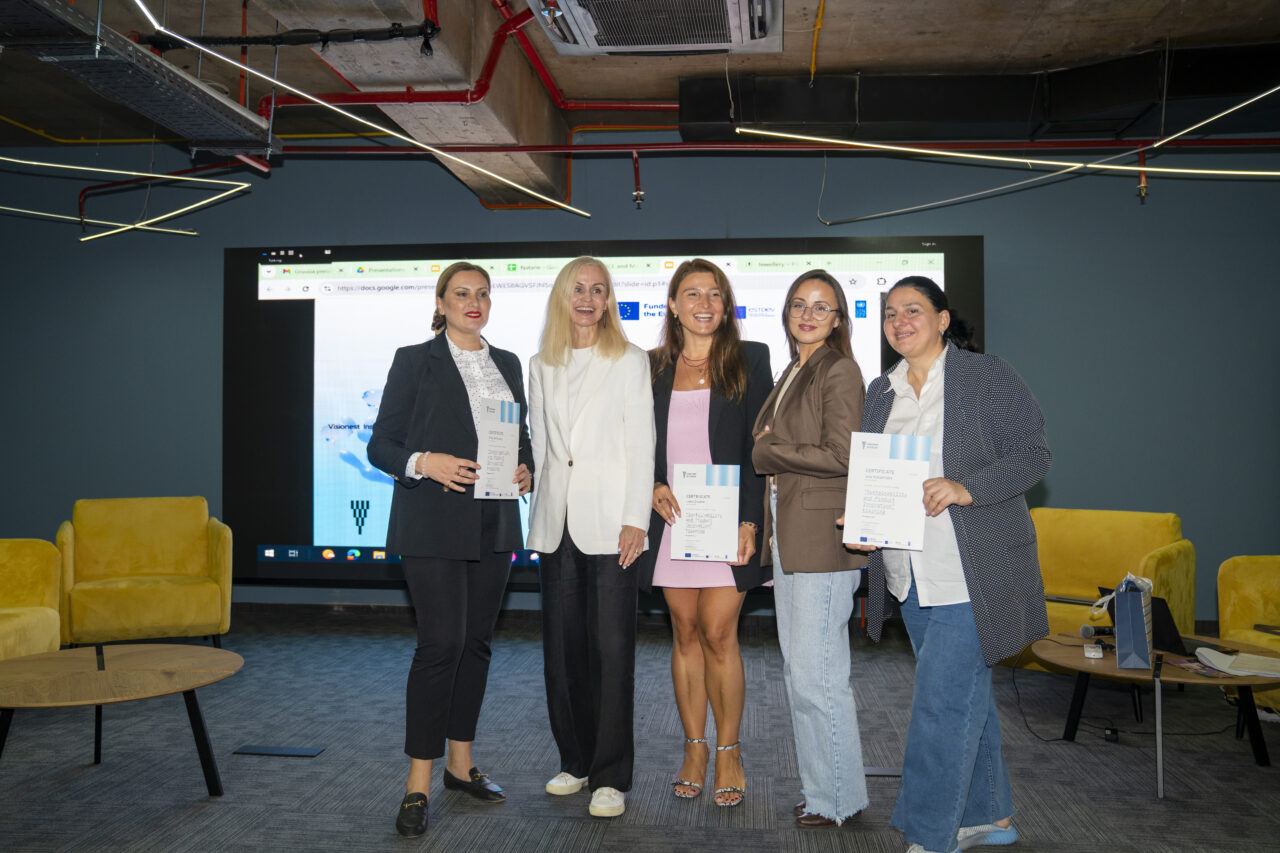
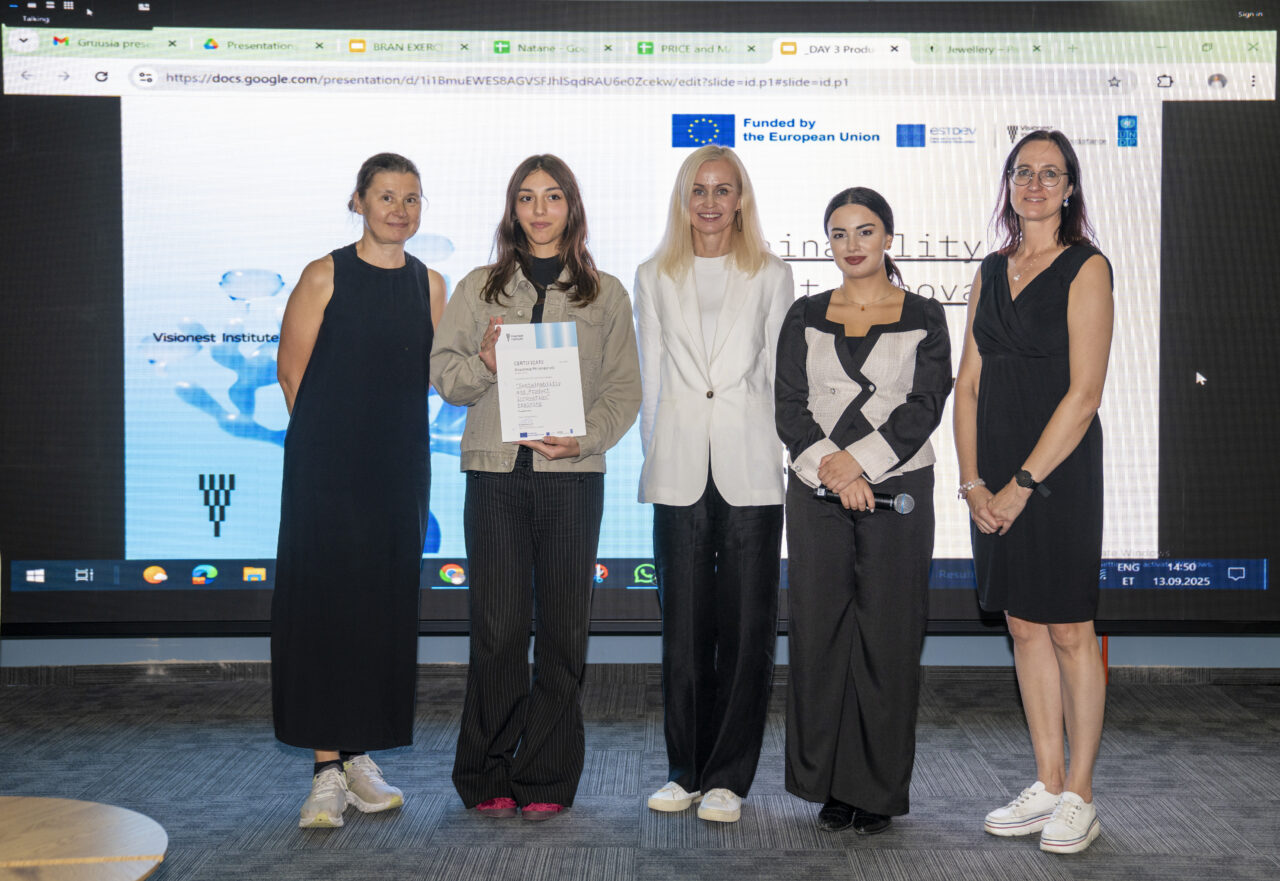
The three-day program concluded with a certificates ceremony, celebrating the dedication and achievements of all attendees. Certificates were delivered by Anu-Mall Naarits, CEO of Visionest Institute; Kaie Kaas Ojavere, the trainer and circular economy expert; Krista Kulderknup, Project Manager; and Tatia Paradashvili, Communications and Training Coordinator.
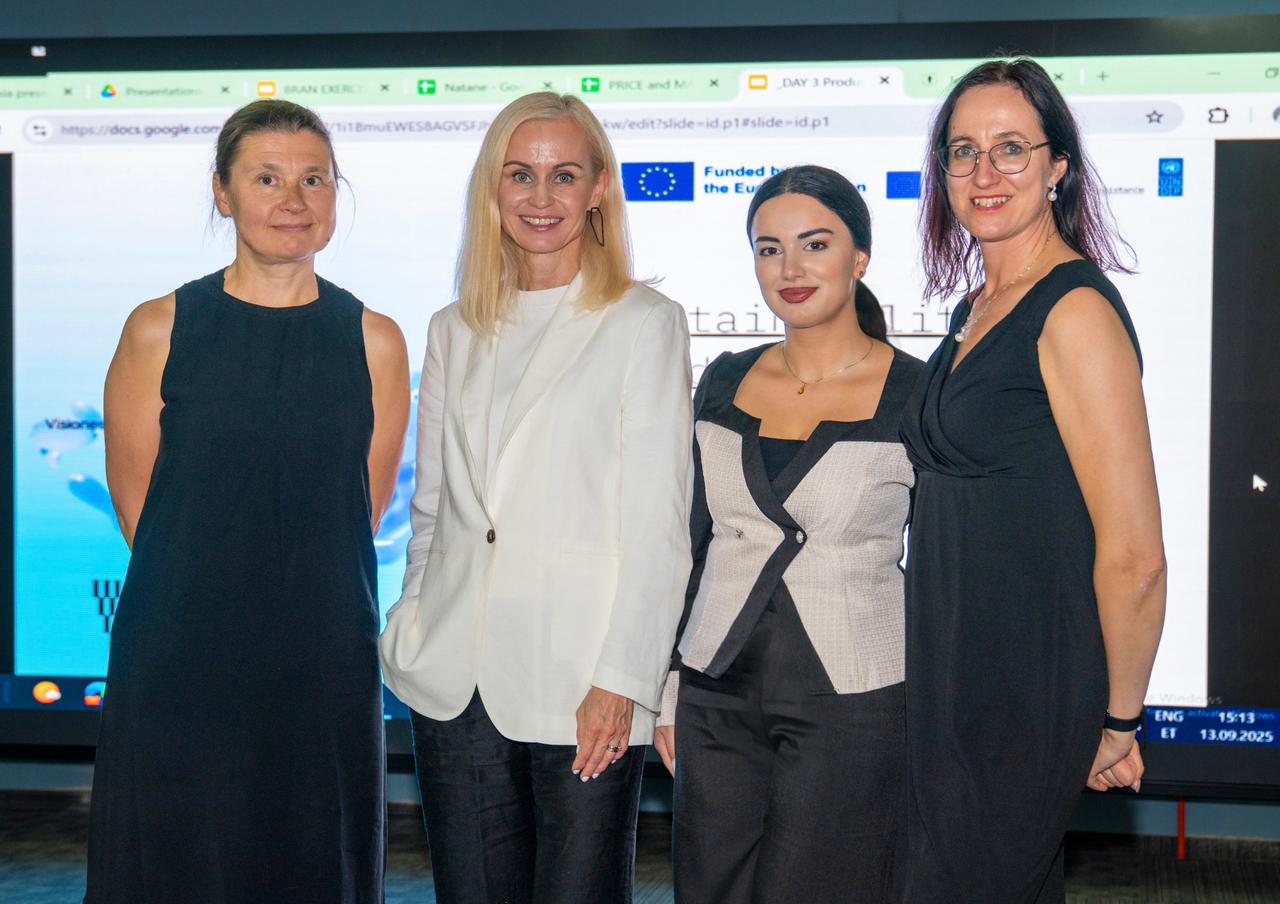
Completing this three-day training is a true testament to the growth and dedication of Georgia’s creative SMEs. It reflects their readiness to embrace sustainable practices and innovative approaches, strengthen their international competitiveness, and contribute meaningfully to the country’s evolving creative landscape.
This initiative, funded by the European Union and implemented by Visionest Institute, a contractor of the Estonian Centre for International Development, with support from UNDP Georgia, aims to boost SMEs’ exports to the EU and European markets through participation in international trade fairs and B2B events.
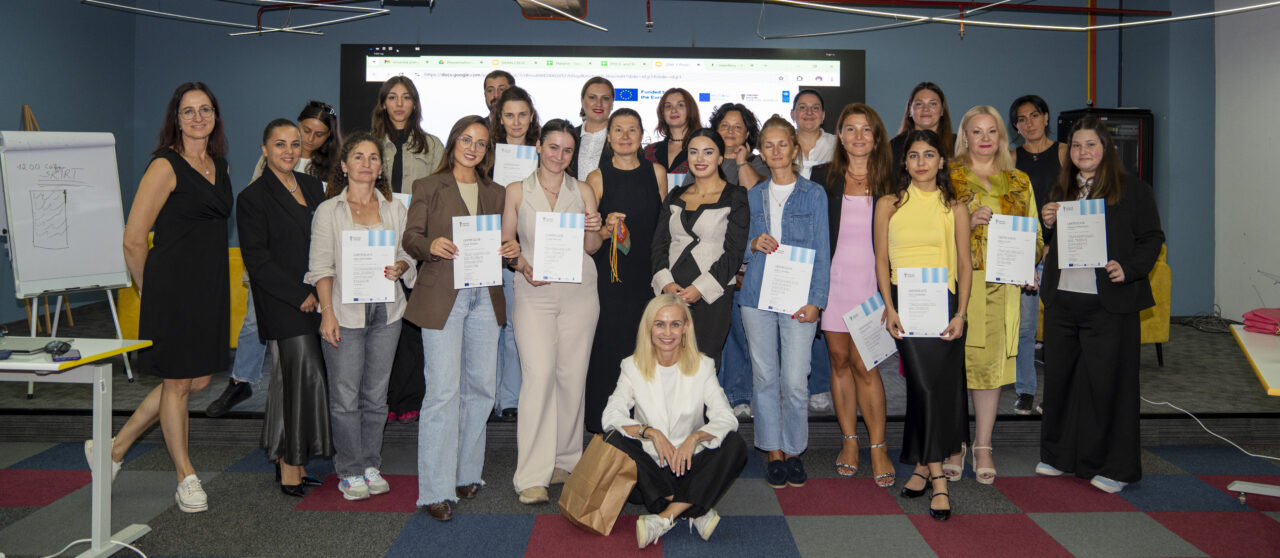
📸 Visionest Institute / Mariam Paradas Photography