
Armenian small and medium-sized enterprises face a challenge familiar to many small countries: how to break out of the limitations of the domestic market and find a path to international markets. Armenia is at an economic crossroads — regional constraints and a small domestic market have held back company growth, while the global market demands flexibility, innovation and export readiness.
Armenia has set an ambitious goal to make exports the main engine of economic growth for 2025–2030. While in 2023 there were 272 exporting companies in Armenia, the export development strategy aims to increase that number to 440 by 2030.
Locally this encourages job creation and the development of new products; internationally it improves the image — Armenia is no longer merely a small market but a potential partner in global supply chains.
The country of Armenia is focusing on infrastructure development, market diversification and supporting exporters.
The programme launched by Visionest Institute aims to develop participants’ export capacity through acquiring practical skills and by creating market analyses and concrete export plans — from target market selection and pricing strategies to certifications, logistics and finding business partners.
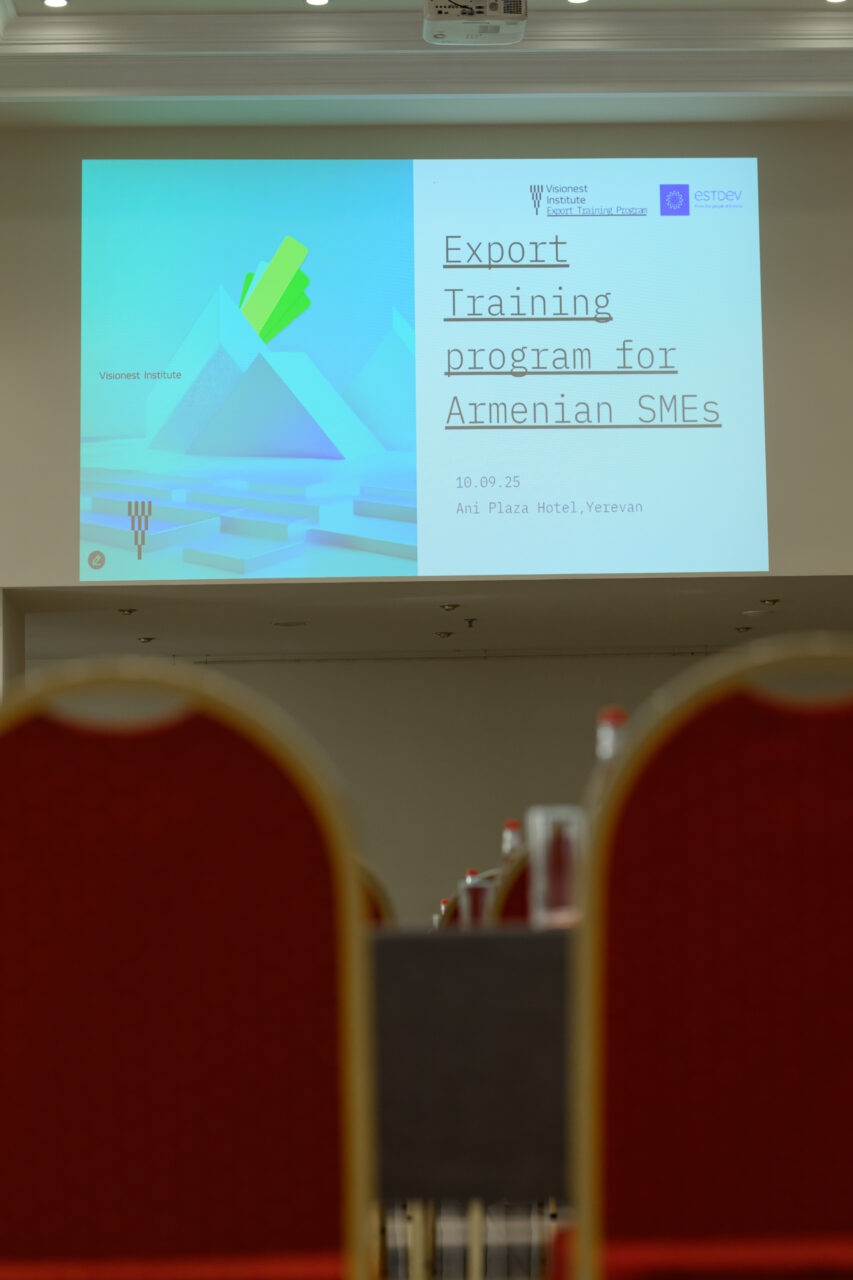
“By supporting Armenian entrepreneurs, Estonia shows solidarity with its Eastern Partnership countries and shares its experience in market-economy development and export success,” explains Visionest Institute director Anu-Mall Naarits, describing why the organisation opened the training programme in Armenia.
“Every company that completes the training leaves with a concrete plan for how to export its products to Europe and the world market.”
The export trainings provide targeted, practical support that helps Armenian small and medium-sized enterprises (SMEs) systematically prepare for export activities. The Estonian-led initiative brings together experts, mentors and local entrepreneurs. The result is a framework that teaches entrepreneurs to think strategically: to choose the right target markets, understand cultural and regulatory barriers in global markets, and develop realistic export plans.
The entire programme design and activities implemented in Armenia are based on previous success stories from Estonia and Ukraine and are adapted to local needs.
A structured, phased approach — preparation and participant selection, training and practical workshops, mentoring and impact analysis — ensures measurable results and sustainability.
The multifaceted impact of the program
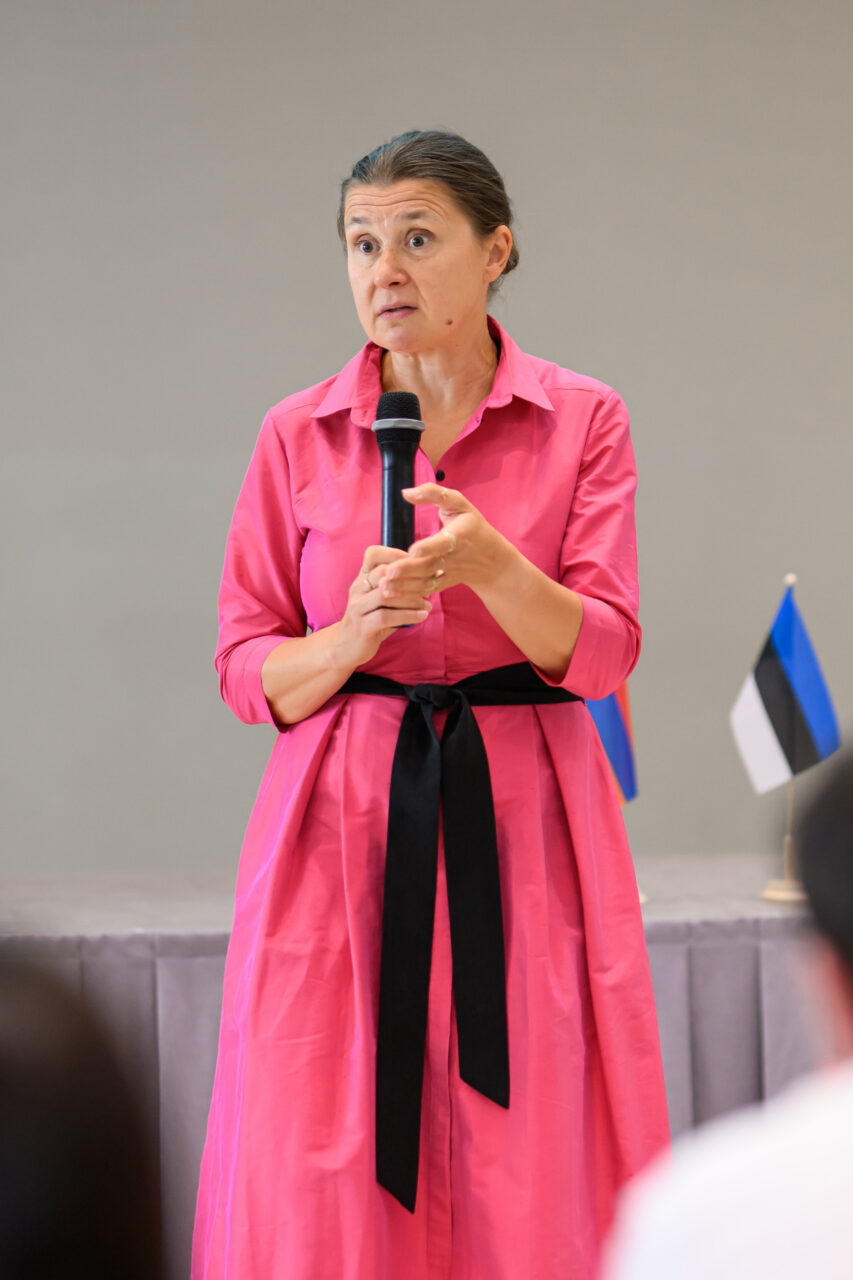
In the short term, the export trainings launched in Armenia increase local entrepreneurs’ awareness of export readiness criteria and provide very concrete tools for entering new markets and refining business strategies.
Successful and consistent application of the acquired knowledge will increase SMEs’ competitiveness in the global market, help grow export volumes and create new business networks and partnerships more easily and quickly. Long-term impact includes diversifying Armenia’s economy, creating new jobs and stronger integration into international value chains — outcomes that also align with Estonia’s development cooperation goal to strengthen partner countries’ business environment and support sustainable economic growth.
At least 80% of the 60 participants starting across five different sectors should, as a result of the programme, take the first concrete steps into exporting or enter a new market, which in turn will foster the emergence of an international business culture and a local network of export practitioners.
Estonia has a special role in Armenia
Our export success over recent decades is a vivid example of how a small country can, despite limited conditions, enter the global business arena through smart planning and a systematic approach. “Bringing this experience to Armenia means not only sharing knowledge but also solidarity and strategic partnership,” Naarits from Visionest Institute affirmed.
“Launching the programme and our acceptance after long discussions and meetings with local organisations and entrepreneurs is a clear signal that Armenia has the ambition to be an active and successful participant in the world economy.
If new export success stories emerge from the programme, they could inspire many other entrepreneurs in the region.
Most important are the things we bring from Estonia: courage, openness, a practical business culture and community support from those who have faced the same challenges themselves.”
Estonians have reason to be proud: our expertise, tried-and-tested methodologies and growing development cooperation now extend to Armenia. This is not only about economic impact but also cultural ties and trust that position Estonia in Europe as a country notable for development and innovation.
At the opening event, ESTDEV executive director Klen Jäärats welcomed participants via video link, emphasising Estonia’s development-cooperation commitment to strengthening Armenian entrepreneurship. Visionest Institute director Anu-Mall Naarits and European Union representative Frank Hess confirmed European partners’ support and trust in the programme.
The programme created by Visionest Institute and supported by the Estonian Centre for International Development Cooperation (ESTDEV) is not merely a series of trainings — it is a strategic investment in Armenia’s economic competitiveness and long-term growth capacity, creating conditions for local SMEs to find and seize international opportunities and build sustainable export businesses.
Today’s development-cooperation priorities in Armenia are education, democracy, poverty reduction and now also support for entrepreneurship and innovation — practical measures that help elevate local businesses to a higher level and give them the chance to become part of a broader, Europe-based value space.

COMMENT
Piruza Harutjunjan, Honorary Consul of Armenia in Estonia:

Since 2021 Armenia’s economy has recovered rapidly after the COVID crisis and continues to show strong, above-average growth. In recent years the economy has been driven by the technology sector, construction, agriculture and tourism. As a landlocked country, exports and foreign investment play a central role in Armenia’s development.
Armenia and Estonia have for decades organised study visits and shared experiences. Now, as Armenia moves increasingly towards integration with the European Union, these contacts are becoming substantive and broad partnerships — primarily in digitalisation, but also in education, culture and tourism. Armenia wishes to learn from Estonia’s success stories and apply best practices and business models in its reforms, while also taking cultural specifics into account.
Some examples of recent cooperation initiatives:
- Civitta has recently merged with local tech company HackTech.
- SK ID Solutions has started a strategic partnership with local trust-service provider ImID.
- Proud Engineers is leading a project that automates data exchange between the Armenian tax authority and banks.
- ESTDEV implements several development projects in Armenia
COMMENT

Armenia has clearly and boldly expressed its desire to move politically and economically closer to the European Union. “Economic relations are precisely the area where determined work can achieve tangible results relatively quickly and help Armenian companies and people feel this cooperation in their everyday experience.
Recalling my previous diplomatic posting in the South Caucasus, I can confirm that Armenians are distinguished by strong commercial thinking and a practical attitude — not for nothing have they historically been called a people of merchants,” said Margus Gering, ESTDEV’s head for the European region and Ukraine reconstruction. “Armenia and the European Union have very good growth potential in economic and trade relations and we are proud that our reliable partner Visionest Institute is implementing such a substantive and practical export-training programme in Armenia,” Gering added.
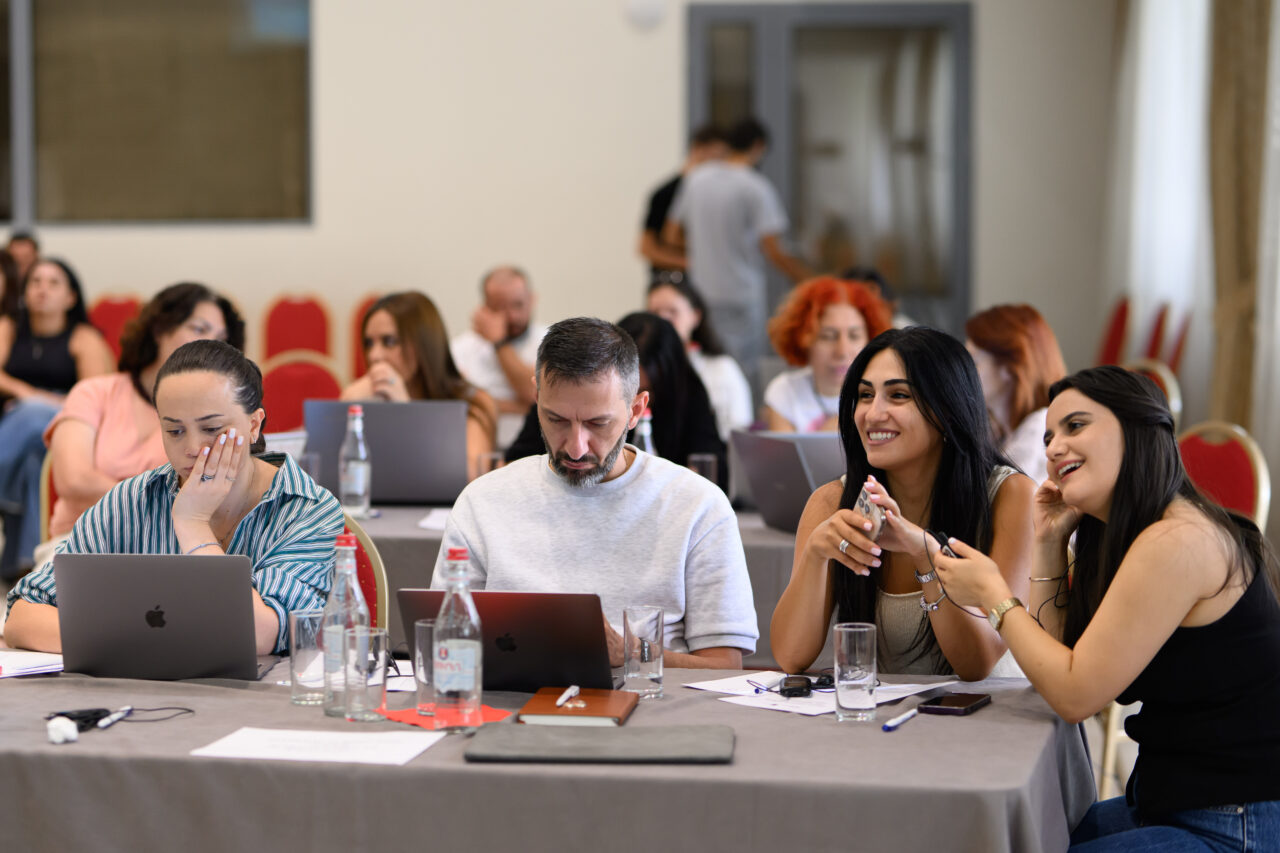
FEEDBACK FROM PARTICIPANTS
Company name: Urme fashion
Participant: Armine Babayan – Owner of Urme fashion brand
“I joined the program to gain structured knowledge and practical tools that will help me prepare my brand for international markets. Since my company is still new in the export field, I wanted to learn directly from experts and understand the steps needed to build a sustainable export strategy.
The program helps me identify potential export markets, understand customer expectations abroad, and learn about the operational and financial aspects of exporting.
This knowledge is crucial for the growth of my company, as it provides me with a clear roadmap to expand beyond the local market. I expect to gain not only theoretical knowledge but also practical insights, real case studies, and networking opportunities that will support me in building long-term export partnerships.
I also hope the program will help me avoid common mistakes new exporters make. So far, my impressions are very positive. The sessions are well-structured, the experts provide valuable and practical feedback, and the atmosphere encourages active participation. I feel that each module brings me one step closer to being fully prepared for entering international markets.”
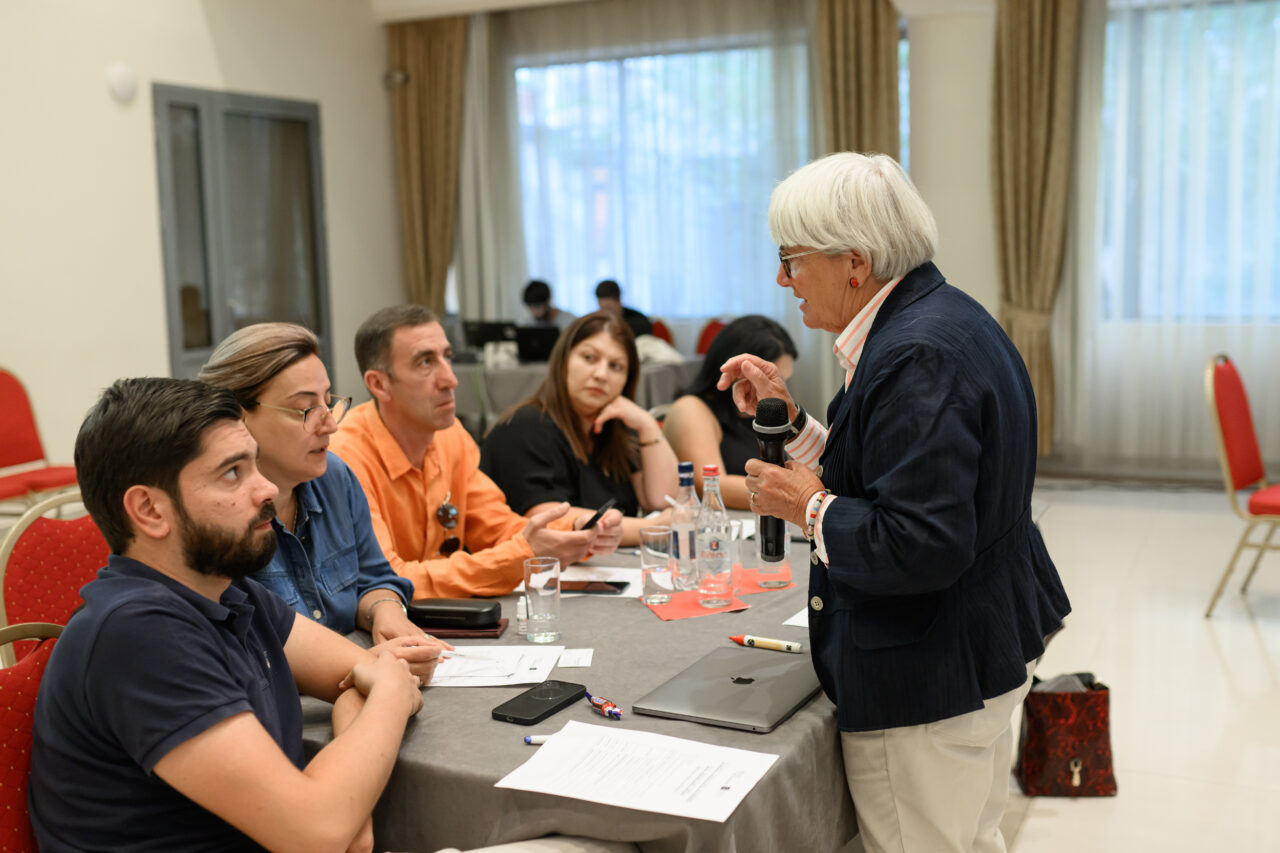
Company name: Pogos Software
Participant: Lilit Azatyan – CEO of Pogos Software
“We joined to turn growing international interest into a disciplined export engine, to pressure-test our assumptions with experts, adopt proven market-entry frameworks, and build the operating cadence needed to scale beyond Armenia with confidence.
The program accelerates our growth by helping us prioritize target markets with evidence, sharpen our value proposition by segment, and choose the right channels, and execute through a clear plan with KPIs resulting in tighter focus, shorter sales cycles, and a stronger international pipeline.
We are expecting to graduate with a working export playbook: a validated market shortlist, refined ICPs and messaging, a practical pricing approach, and a ready go-to-market plan, plus connections to potential partners and clients.
The impressions about the program are very positive. The content is actionable and well-structured, the homework exercises translate directly into our day-to-day work and is effectively becoming the playbook I mentioned above: each assignment compiles into a practical, company-specific workbook we can use immediately, and it’s been very helpful. The trainers are experienced, responsive, and outcome-focused. We’ve already applied the market-weighting and ICP frameworks to narrow priority markets and improve team alignment”.