
“The idea was born from the memories of the aroma and taste of herbal tea made from plants collected in the mountains by our grandmother,” the founder, Vahe Khalatyan says.
What followed was a family effort to bring those traditional recipes to life. Each family member took on a role in creating handcrafted herbal teas made exclusively from plants gathered in Armenia’s mountains and fields—combining tradition with modern, attractive packaging.
The company’s vision quickly turned wider.
The goal was clear: to position the brand in the European market as a natural, herbal, beneficial and environmentally friendly product, with organic certification as a future step.
That is when they joined the Visionest Institute’s Export training program in Armenia.
“For me, it is both a dream and a future achievement to be proud of satisfied customers who admire our product and share their experience,” the founder notes.“I would be proud to see our teas in specialized tea boutiques across Europe.”
When the company joined the export program, it was still at a very early stage. Despite not having a finished product at the time, the company applied—and was selected.
“We didn’t yet have a final product, but we had raw materials, determination and clear goals. My enthusiasm was simply limitless,” Vahe notes.
As the journey progressed, challenges emerged at multiple stages, from market selection to partner searches.
“The biggest challenge was insufficient knowledge of European legal regulations, which could lead to serious difficulties if not properly addressed,” Vahe says.
The program played a key role in turning uncertainty into clarity.
“The training allowed us to identify and assess the main risks, find effective ways to mitigate them, and most importantly, it gave us the confidence to start what we had planned and move forward toward our goal,” he says.
As a result, Vahe developed its own export business plan.
“Even with a background in finance, I had never encountered such a well-structured, effective and—most importantly—applicable business plan,” he says.
Viewing the plan as a living document, he has already made adjustments and intends to continue refining it in line with the company’s strategy.
There was also a shift in mindset.
“The most important change is thinking on a larger scale and perceiving the business beyond a limited territory,” he emphasizes.
Today, the company has already produced pilot samples, registered its trademark, and initiated certification and laboratory testing processes.
The next focus is taking real steps for export.
“As for its future export strategy, the company plans to explore the Baltic and Scandinavian markets, taking into account their climatic and geographical characteristics.”
They are now working on establishing networks and finding partners in those countries.
As part of its export ambitions, the team is also planning to participate in a bilateral cooperation event scheduled to take place in Austria later this year, where it aims to present its products to international partners.
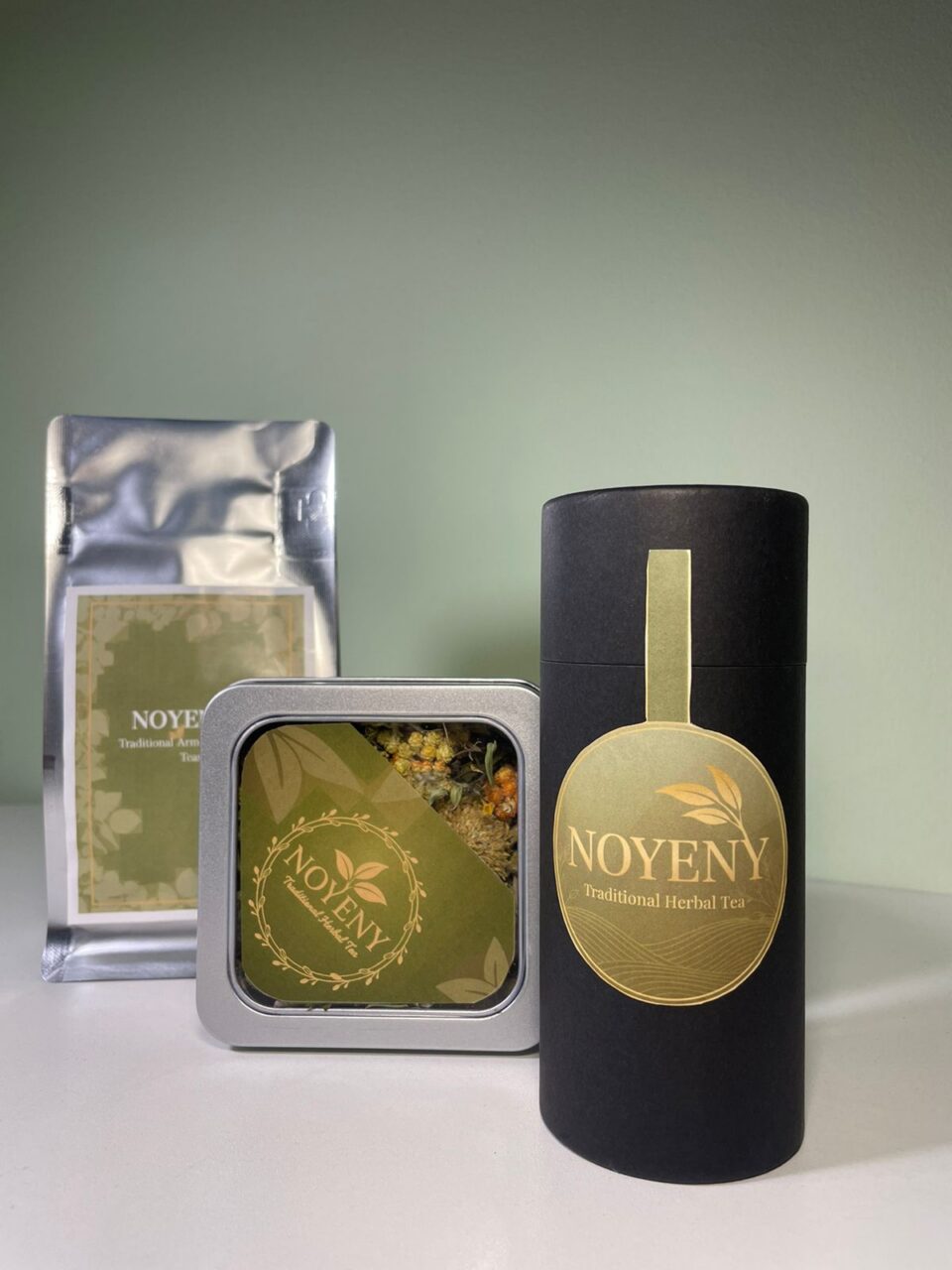
“We see this event as an important opportunity to introduce NOYENY to new markets and establish meaningful international connections,” says Vahe Khalatyan.
Additionally, this year, the company plans to store a limited volume of products in Germany with the support of friends living there, allowing it to begin deliveries to the European market.
“Starting shipments from Germany will help us respond more efficiently to demand and test the market before scaling further,” Khalatyan notes.
In the near future, they will open an online shop and start selling directly to customers. If demand continues to grow, the founder assures that they are fully prepared to scale up and process up to 1.5 tons of raw materials, significantly increasing the production capacity.
The program was implemented by the Visionest Institute with funding from the Estonian Centre for International Development (ESTDEV).