On 10 February 2026, the halls of Polissia National University became a meeting point for our Institute and entrepreneurs – as we gathered to celebrate the graduation of two flagship business education programs — Export Academy and Business Models — implemented within the international initiative Unite for Trade. The event marked the culmination of several […]
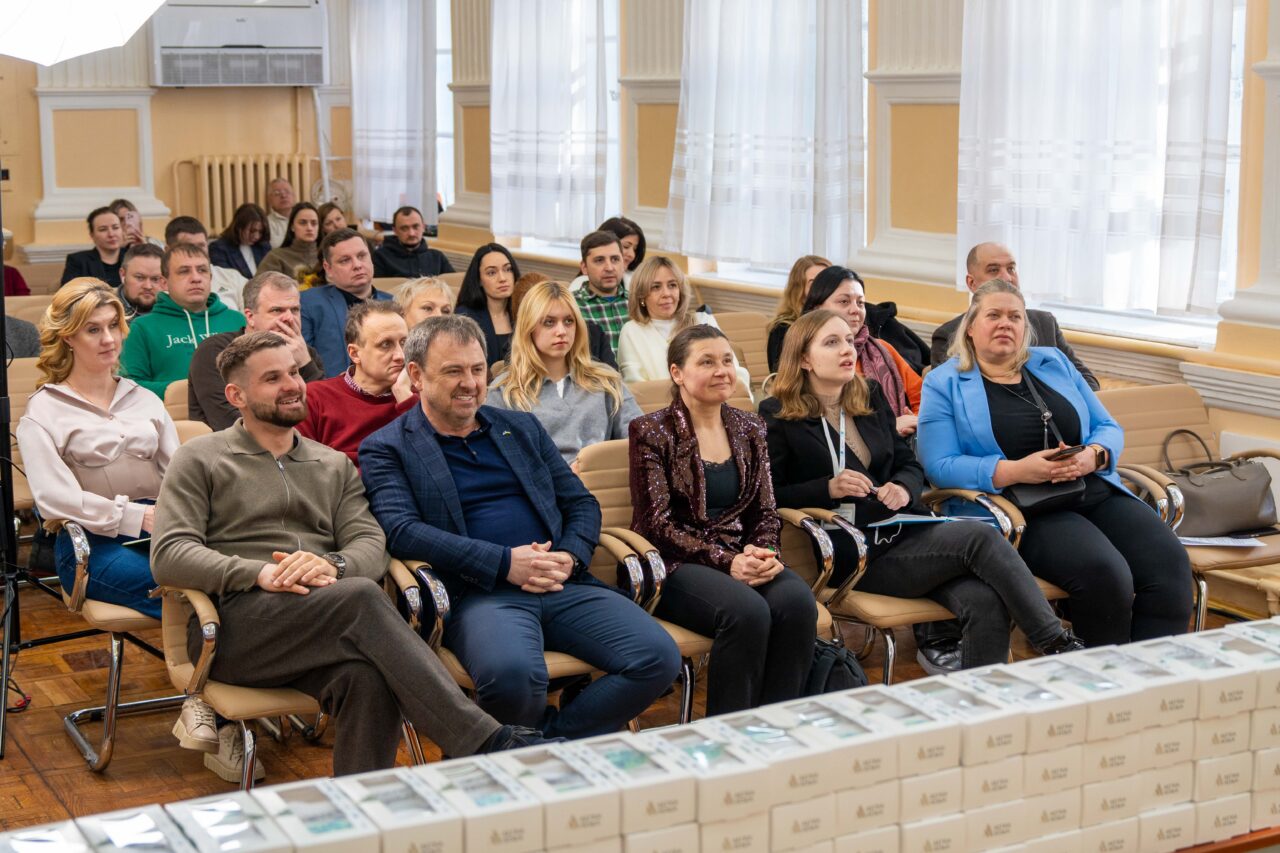
On 10 February 2026, the halls of Polissia National University became a meeting point for our Institute and entrepreneurs – as we gathered to celebrate the graduation of two flagship business education programs — Export Academy and Business Models — implemented within the international initiative Unite for Trade.
The event marked the culmination of several months of intensive learning, mentoring, and practical work by dozens of companies from the Zhytomyr region. For many participants, the graduation symbolized not only the end of a training program, but the beginning of a new stage in the development of their businesses — one focused on innovation, internationalization, and strategic growth.
A partnership that empowers regional business
The graduation ceremony began with inspiring words from Pavlo Kuts, Director of the Department of Agro-Industrial Development and Economic Policy at the Zhytomyr Regional State Administration; Anu-Mall Naarits, CEO of Visionest Institute; and Mykola Sychenko, Honorary Consul of Estonia in the Zhytomyr region. Their speeches carried a unifying message: businesses in Ukraine’s regions have the capacity to think globally while strengthening cooperation locally. They also underscored the tangible results already achieved through international collaboration between Ukraine and Estonia – from education and mentoring to networking and business partnerships – proving that cross-border cooperation can drive real growth and opportunity.
Export Academy: preparing companies for international markets
The Export Academy program was designed to equip companies with the tools needed to expand beyond domestic markets. Participants worked on market research, export strategy development, pricing models, and operational readiness for international trade.
The program brought together:
34 companies
70 professionals
As a result of the program:
26 companies developed comprehensive export plans
40% created or fundamentally redesigned their business strategies
the overall satisfaction rate reached 9.4 out of 10
Beyond the numbers, the program generated significant practical change:
88% of companies confirmed a positive impact on their business
91% expect growth in international sales
20% introduced new management structures
20% integrated analytical tools for market research
Rethinking export strategy: the story of TM Lehka Khoda
One of the most inspiring stories came from TM Lehka Khoda, one of Ukraine’s oldest manufacturers of hosiery products. During the program, the company undertook a comprehensive reassessment of its export strategy.
“During the training we realized that, in many ways, we had been approaching exports incorrectly,” the company shared during the event. “The program helped us completely rethink our strategy — from production planning to logistics and pricing.”
The company carried out a thorough analysis of its cost structure, redesigned its product range to meet European consumer expectations, and improved internal processes.
The results came quickly.
“We registered our international trademark Cozy Hozy and already made our first shipment abroad under this brand. Through the program’s online forum we met the Estonian online store N-Trend and signed our first export contract.”
Equally important for the company was the community aspect of the program.
“The program gave us something extremely valuable — connections. We built relationships with other entrepreneurs in our region and realized that cooperation between local companies can be just as powerful as entering foreign markets.”
From local engineering to export ambitions: Loren Group
Another notable transformation came from Loren Group, an ambitious engineering company represented by Valeriia Dihot.
“The program became a catalyst for change in our company,” she explained. “It helped us rethink the way we approach business decisions and implement real management improvements.”
Among the changes introduced by the company were new analytical tools for evaluating each project.
“We implemented margin calculations for every order and added an analytical component to evaluate projects. The idea of ‘working just for the sake of work’ is now in the past.”
The company also introduced regular strategic reviews.
“Every quarter we conduct a detailed SWOT analysis of the company. This allows us to clearly understand where we are going and which changes are necessary.”
Perhaps most importantly, the program helped Loren Group take the first concrete steps toward exporting.
“Before the program, exports felt like something we would do someday in the future. Now we have a clear export plan and understand exactly which steps we need to take.”
The company conducted a detailed analysis of the Slovak market and is currently researching opportunities in Estonia using the methodologies learned during the program.
The training also led to new partnerships inside the region.
“Through the program we started cooperating with other companies. For example, we now work with Lehka Khoda for corporate gifts, and we are planning to cooperate with Zhytomyr Cardboard Mill to improve our packaging and reduce transport damage risks.”
Zernovita: understanding international consumers
For Zernovita, the program provided the analytical tools necessary to understand foreign markets.
“The knowledge we gained is directly applicable to our daily work,” the company’s representative shared. “We analyzed demand for our products, studied consumer habits in our target country, selected a promising niche, and adapted our product accordingly.”
The experience helped the company make its first steps toward international expansion based on real market insights rather than assumptions.
Business Models program: transforming companies from within
Alongside Export Academy, the Business Models program focused on helping entrepreneurs redesign their business strategies and build sustainable growth models.
The program involved:
46 companies
81 participants
Results included:
26 teams developed full business plans
91% reported increased knowledge and competencies
the average program rating reached 4.7 out of 5
Participants also reported measurable operational changes:
over 70% revised their business models
nearly 60% developed clear development strategies
one in three opened new revenue streams
one in four optimized operational costs
Translation Agency Trade: from intuition to strategy
For Translation Agency Trade, represented by Oleksandr Kulikov, the program became a turning point in the company’s growth.
“We have participated in many educational projects before, but this was the first one that truly changed the processes inside our company.”
The program helped the founders align their strategic vision.
“Many decisions we had previously made intuitively were validated through the training and discussions with mentors. My business partner and I finally reached a shared understanding of where we want the company to go.”
One of the most practical outcomes was the digital transformation of the company’s operations.
“Following the trainers’ recommendations, we moved from Excel spreadsheets to a full CRM system. In January 2026 we completed the transition.”
The company also launched Google Ads campaigns in new regions and expanded its marketing team.
“The negotiation techniques we learned even helped us secure better terms when renting our new office.”
Ivales Mebles: building a brand from scratch
Furniture manufacturer Ivales Mebles experienced one of the most dramatic transformations during the program.
“Many participants talked about transformation, and for us it truly happened,” the company shared. “We entered the program as one company and left as a completely different one.”
Before joining the program, the company lacked clear positioning.
“We had no defined target audience, no brand identity, no social media presence, and no website. Most of our sales came from word-of-mouth.”
By the end of the program, the company had implemented major changes.
“We conducted a full rebranding, defined our target market, created social media pages, launched our website, and developed a marketing strategy.”
Entrepreneurship in education: the story of Liubov Trybun
Entrepreneur Liubov Trybun, who runs an educational initiative, also shared how the program reshaped her approach to business.
“I usually approach such projects with skepticism,” she admitted during the event. “But Unite for Trade exceeded my expectations — this was truly a project focused on results.”
The program helped her structure and scale her educational services.
“When I joined the program, I already had working courses but lacked a clear development strategy. The training helped me define my target segments, formulate a unique value proposition, and structure my product portfolio.”
One of the immediate outcomes was the launch of a new course.
“Using the program’s tools, I developed and tested a new course called ‘Safe Internet for Families’. Within the first month, we saw a significant increase in inquiries from parents.”
The business has since expanded into new educational segments, including programs for children aged 5–6 and participation in international educational initiatives.
“The most important realization for me is that I’m not just creating courses — I’m building a space where people gain skills that can change their lives.”
A growing business community
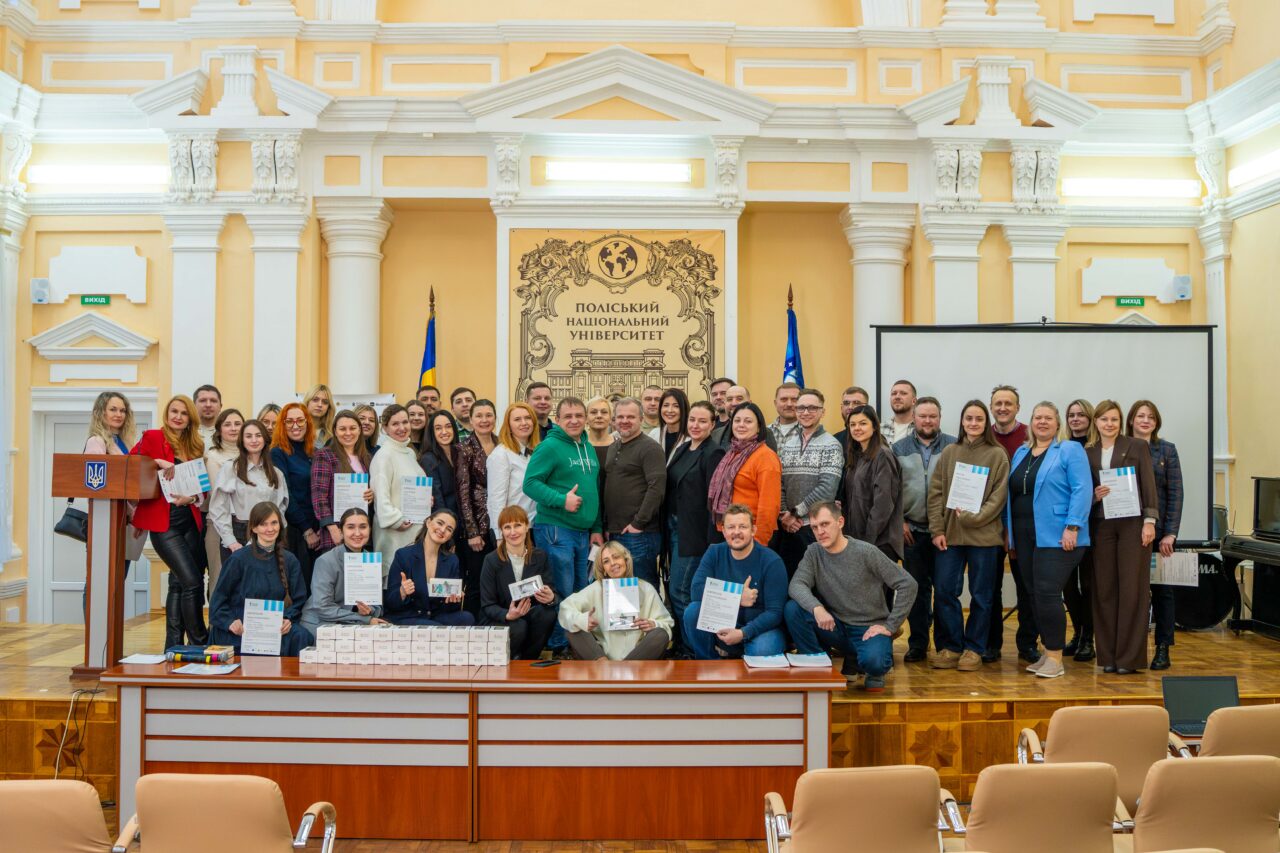
The event concluded with certificate presentations, networking, and lively discussions among participants. Many recalled business visits to each other’s companies, regional business clubs, and collaborative projects that emerged during the program.
Yet the graduation marked not an end but the next stage of collaboration.
Participants will continue working together through:
an upcoming ESG and sustainability module
mentoring support
additional company visits and networking activities
the second Ukrainian-Estonian Business Forum, scheduled for June.
The final group photo taken that day symbolized the most important achievement of the program: a strong entrepreneurial community that is already reshaping the business landscape of the Zhytomyr region.
And as the stories shared during the event demonstrated, when education, analytical thinking, and international cooperation come together, they can lead not only to new knowledge — but to real, measurable transformation of businesses and entire regional economies.
The Unite for Trade program is developed and implemented by Visionest Institute in Ukraine (Estonia) in cooperation with the Entrepreneurship and Export Promotion Office under the national Diia.Business project, and the Honorary Consulate of the Republic of Estonia in Zhytomyr. The program is financed by ESTDEV — the Estonian Centre for International Development.