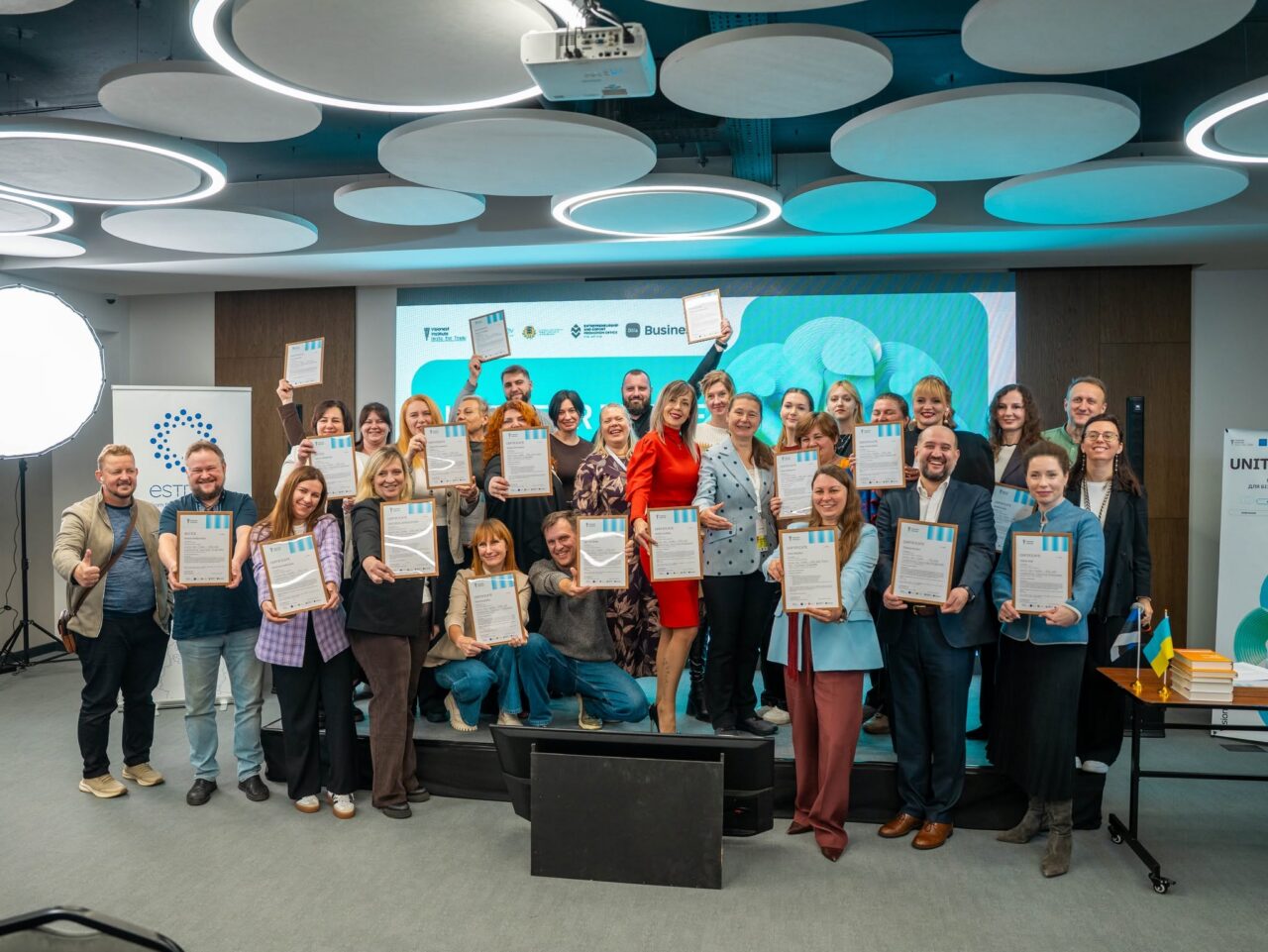
295 companies, 441 participants, three training programmes and more than 100 B2B meetings. Over the course of a year, Unite for Trade brought together entrepreneurs from Ukraine’s Zhytomyr region to address practical business challenges — from entering international markets to adopting ESG principles and exploring new opportunities for cooperation.
On 27 August 2025, entrepreneurs, representatives of business organisations and experts gathered for the first Unite for Trade event. They came with different questions but a common goal: how to expand into new markets, find new customers, rethink business models, build partnerships and adapt to the requirements of international markets.
One year later, the programme had brought together a community of 295 unique companies and 441 participants. Businesses from six sectors joined the initiative: food and fast-moving consumer goods (FMCG), home goods manufacturing, construction, mechanical engineering, light industry and agriculture.
Unite for Trade went beyond traditional training courses. It combined the development of business skills with business clubs, mentoring, company visits, international knowledge exchange and opportunities for direct negotiations between businesses. This practical approach became one of the defining features of the programme’s work over the year.
Turning Export Ambitions into Practical Plans
For companies planning to enter international markets or expand their existing export operations, understanding the potential of their products is only the starting point. They also need to know the requirements of target markets, identify suitable market-entry strategies and understand how international sales work in practice.
These challenges were at the heart of the Export Academy. A total of 34 companies completed the programme, with 72 professionals taking part in the training. The programme delivered 101 hours of training, and participants rated their satisfaction at an average of 9.4 out of 10.
However, developing a business requires more than export knowledge. Companies also need to identify new revenue streams, rethink how they work with customers and make decisions that help them remain competitive.
This was the focus of the Business Models Training programme. It brought together 46 companies and 83 participants. By the end of the training, 60% of participants had developed concrete business development plans, while one in three had identified new sources of revenue.
These results show how working on a business model can go beyond theoretical planning. It can help entrepreneurs define their next steps, reassess how their businesses operate and identify new opportunities for growth.
ESG: From Understanding the Principles to Putting Them into Practice
Another key area of Unite for Trade was the adoption of sustainable business practices. For Ukrainian manufacturers, this is increasingly connected to business management, responsibility towards employees and the environment, transparent processes and relationships with international partners.
A total of 37 companies participated in the ESG: Implementing Sustainable Business Practices programme. Following the training, participants’ average ESG knowledge scores increased by 49%, while 80% were already implementing relevant practices or ready to start doing so. Overall satisfaction with the programme reached 9.4 out of 10.
One example of how the knowledge gained through the programme can be put into practice is Eco-Plant LLC, a household chemicals manufacturer based in Malyn, Zhytomyr region.
During the programme, the company conducted a self-assessment of its environmental management practices, improved its tracking of electricity and water consumption, and developed a waste management procedure and action plan. It also analysed its production cycle to identify opportunities to reduce losses and reuse materials.
On the social and governance sides, the company worked on a psychosocial support policy for employees, improved its onboarding and mentoring processes, and prepared a code of ethics and a draft anti-corruption policy.
For Eco-Plant, ESG was not simply about preparing a set of documents. It became an opportunity to review specific production and management processes. The company also identified further steps to explore, including the potential installation of solar panels and the development of its own wastewater treatment facilities.
The programme also helped build local expertise in sustainability. Seven graduates of the ESG Train the Trainers programme prepared to deliver training for local small and medium-sized businesses. Their readiness to develop and deliver training courses increased by 64%, while all seven rated the programme’s impact on their professional development at the highest level, 10 out of 10. Three training modules were developed as part of this initiative.
This is an important outcome for the region: the knowledge and experience gained can continue to spread beyond the original training programme, reaching more businesses through local trainers.
Business Connections That Can Lead to New Partnerships
One of the challenges facing small and medium-sized businesses is the limited opportunity to find partners beyond their existing professional networks. Unite for Trade addressed this through mentoring, business clubs, entrepreneurs’ meetings and visits that introduced participants to the operations of other companies.
A total of 53 companies took part in the mentoring programme, which included three components: value chain development, pitching sessions and B2B meetings. In total, 108 B2B meetings took place, and 93% of participants mapped and analysed their own value chains. Participants rated the usefulness of this stage at an average of 4.7 out of 5.
These meetings offered businesses an opportunity to look at potential partners not only as competitors, but also as participants in a shared production or commercial process. Companies could identify common interests, explore complementary capabilities and consider forms of cooperation that might not previously have seemed obvious.
Business clubs provided another space for making these connections. Over the course of the year, 12 meetings were held in four cities across the region: Zhytomyr, Korosten, Berdychiv and Zviahel. The meetings attracted 154 unique participants representing 130 companies.
Company visits also played an important role. The programme organised 12 visits, involving 80 unique participants from 51 companies and generating 186 attendances in total.
Entrepreneurs had the opportunity to see how other businesses operate, speak directly with their managers and discuss potential areas of cooperation. According to feedback surveys, 99.3% of responses indicated that the visits had provided new knowledge or business ideas. A further 91.7% indicated that cooperation with the visited company was a possibility, either immediately or in the future.
These figures do not mean that every new contact will necessarily turn into a commercial contract. However, they suggest that direct exposure to other businesses and their operations can help entrepreneurs identify more opportunities for development.
Learning from Estonia and Connecting Ukrainian and Estonian Businesses
The programme’s international component gave participants an opportunity to explore different approaches to business management and entrepreneurship development.
Representatives of 11 companies took part in a study visit to Estonia. Over five days, participants explored local business practices, with nine companies visited as part of the programme.
The Estonian-Ukrainian online business forums provided another platform for knowledge exchange. Two forums were held, bringing together more than 70 participants from six economic sectors.
These activities complemented the training by creating opportunities for direct dialogue, exposure to different market approaches and the exploration of potential partnerships. For companies considering international cooperation, they also offered a chance to gain a better understanding of another country’s business environment and assess possible areas of collaboration.
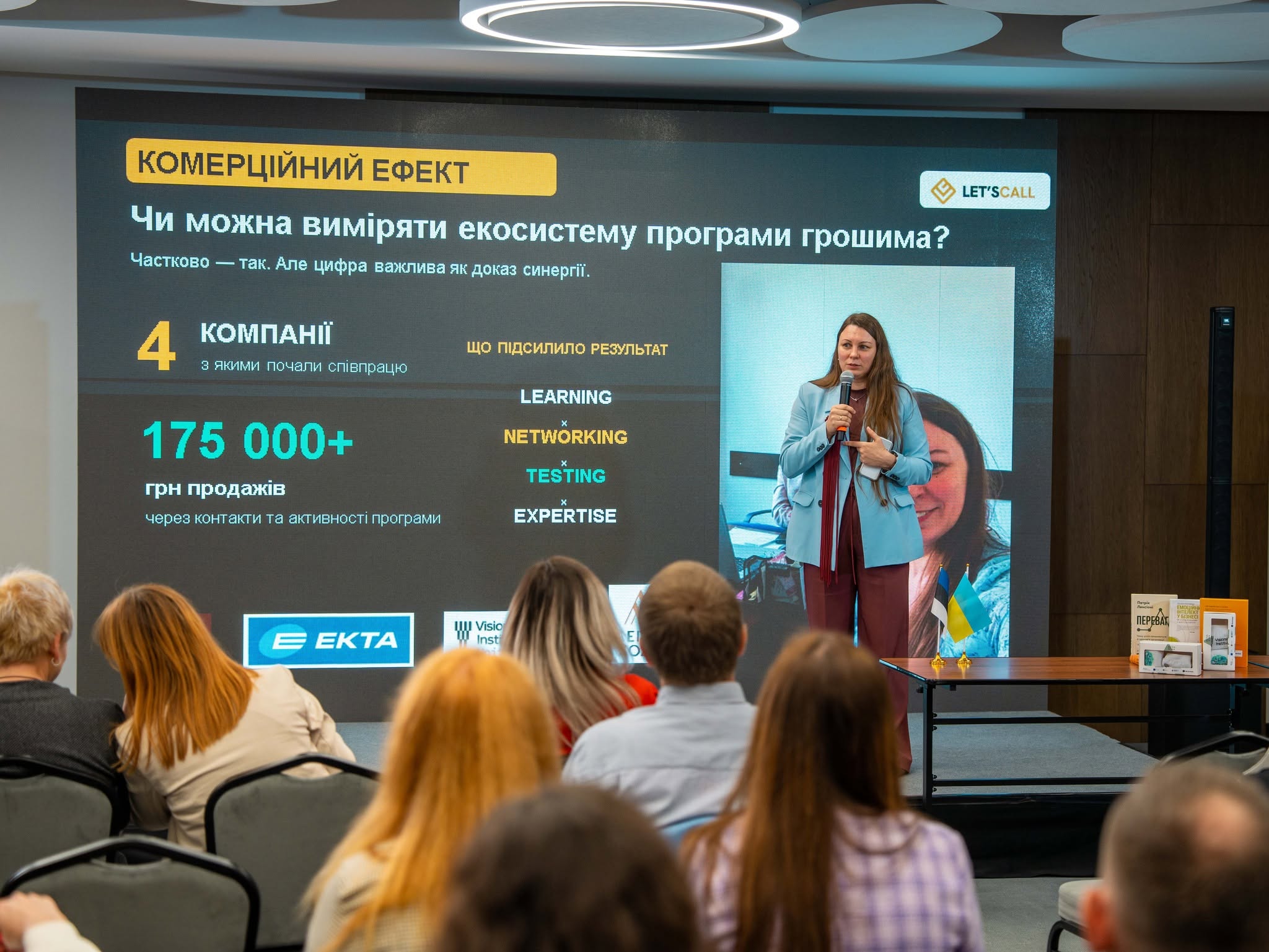
Building a Business Community That Can Keep Growing
Over the course of a year, Unite for Trade developed into more than a series of training activities. It helped create an environment where entrepreneurs could exchange experience, test their ideas, access expert support and connect with potential partners.
The programme delivered three dedicated training streams — Export Academy, Business Models Training and ESG — alongside 12 company visits, 12 business club meetings in four cities, a study visit to Estonia and two international online business forums. A total of 28 trainers contributed to the different training programmes.
On 24 September 2026, Unite for Trade held its final event in Zhytomyr. It was an opportunity to reflect on the work accomplished, recognise the programme’s graduates and look back at how a broad network of entrepreneurs and experts had taken shape over the year. Representatives of Loren Group, Eco-Plant and the Zernovita brand were among those recognised.
Over the year, participating companies gained new knowledge, developed business plans, began working on internal changes and expanded their professional networks. Some of these outcomes have already translated into concrete action, while others will take time to develop into new products, partnerships or entry into international markets.
This is where the long-term value of initiatives like Unite for Trade lies: not simply in the number of events delivered, but in what remains after they end — stronger business capabilities, new connections and a greater readiness to move forward.

The Unite for Trade program is developed and implemented by Visionest Institute in Ukraine (Estonia) in cooperation with the Entrepreneurship and Export Promotion Office under the national Diia.Business project, and the Honorary Consulate of the Republic of Estonia in Zhytomyr. The program is financed by ESTDEV — the Estonian Centre for International Development.