
Open discussion, practical case stories, and cooperation between partners from Estonia, Armenia and other European countries laid the foundation for a programme focused on fast and meaningful development of export capacity.
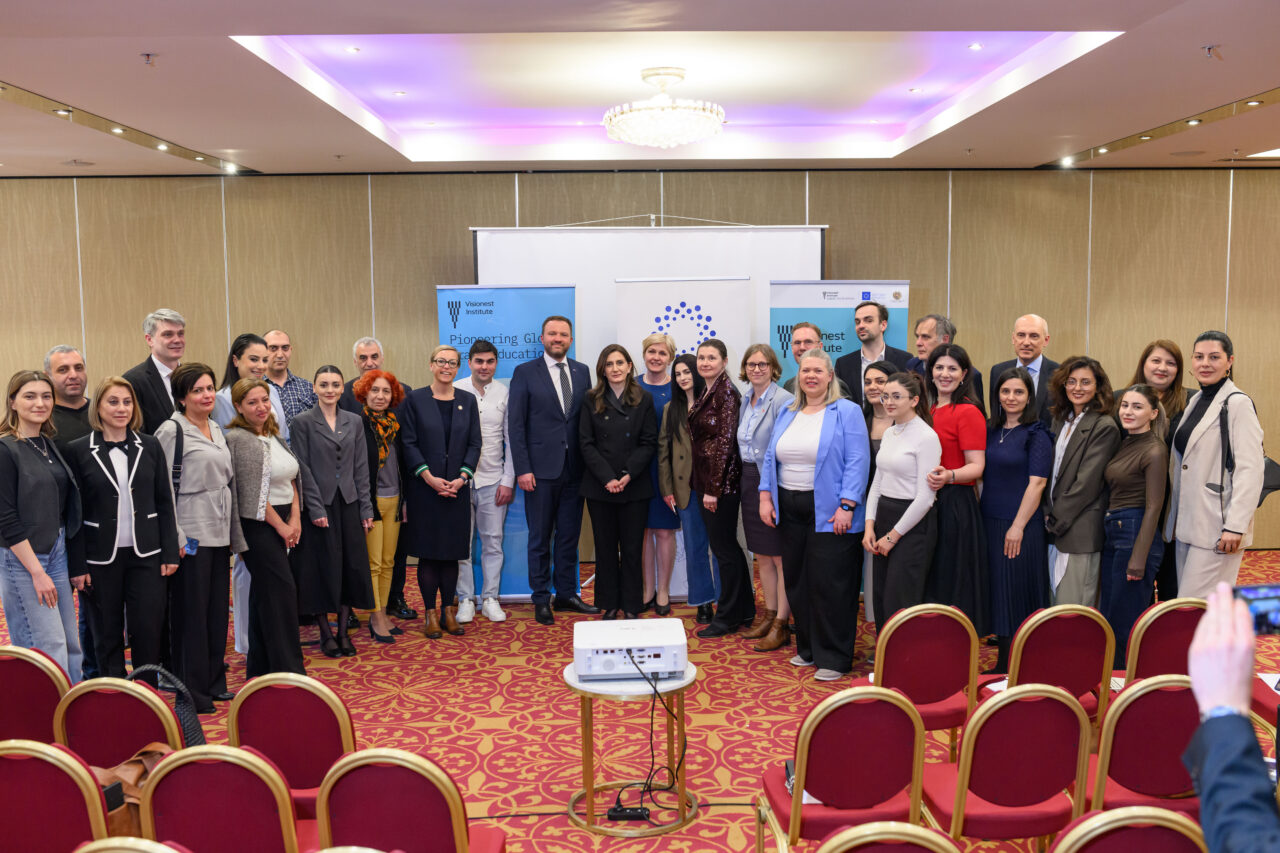
Shared goal: strengthening Armenia’s export potential
The opening event was moderated by Astghik Sargsyan, who highlighted in her introduction the strong participation of partners, experts and decision-makers – a clear sign that boosting Armenia’s export potential is a common priority.
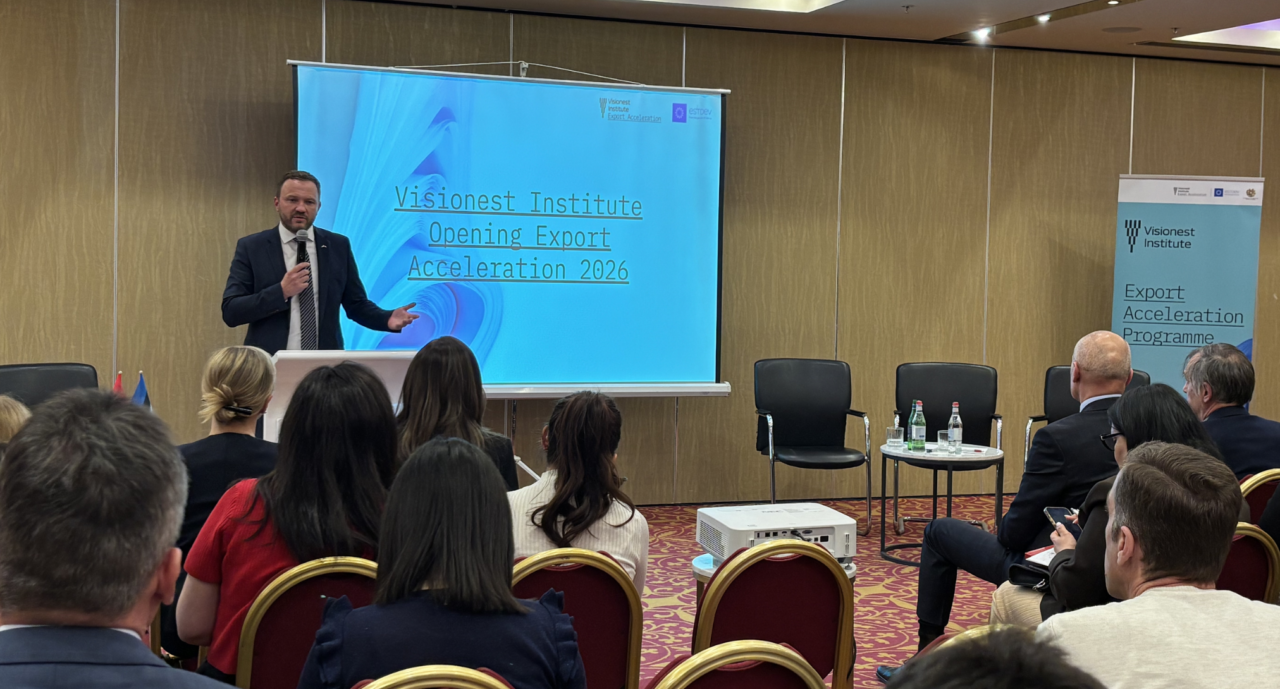
The official opening was entrusted to Anu‑Mall Naarits, CEO of Visionest Institute, who stressed that the programme will not remain on the level of strategy papers, but is designed to lead companies to tangible results in foreign markets.
Visionest has previous experience in delivering export trainings for Armenian entrepreneurs, and the new programme builds directly on that foundation.
Panel discussion: what kind of support really helps exports grow?
The core of the event was the panel discussion “From Strategy to Action: How Development Cooperation Can Support Armenian Exporters”, which focused on how development cooperation and international partnerships can best support Armenian businesses.
The panel featured:
- Anushik Avetyan, Deputy Minister, Ministry of Economy of Armenia
- Frank Hess, Head of Cooperation, EU Delegation to Armenia
- Klas Waldenström, Head of Development Cooperation, Embassy of Sweden
- Katrin Buder‑Pelz, Head of Development Cooperation, Embassy of Germany
The discussion addressed several key questions:
- What does real support mean for a company – which programmes and solutions deliver measurable results?
- What are the main priorities for making Armenia “export-ready” – in terms of policy, business environment and entrepreneurial skills?
- Is development cooperation still in the strategy phase or are concrete results already visible on the ground?
- How do Armenia–EU relations influence the implementation of new initiatives and the continued presence of international organisations?
- What should Armenian exporters focus on right now – which markets and opportunities are most relevant today?
Panellists underlined that building export capacity requires both political continuity and hands-on support for companies – from market research and export planning to networking and access to finance.
Export in practice: the experience of Pogos Software
To bring strategy down to the level of everyday business reality, Visionest export training alumna Naira Yezekyan, founder and CEO of Pogos Software, presented her company’s journey to foreign markets, sharing the steps, decisions and mistakes that proved critical for growth.
“It was a very effective, practical and comprehensive training course that covered all the stages and activities related to the overall export process. This type of training is very important for Armenian SMEs, as companies often face a lack of necessary professional information and difficulties in accessing it. Usually they have to obtain this information independently from many different public and private institutions, consultants and sources, which is time-consuming and costly and unfortunately not always effective or of good quality. In addition to the fact that the training information was presented clearly and in a structured way – covering the entire export process – it was particularly valuable to gain practical skills and knowledge that we have already integrated into our daily work and of course plan to further develop and apply in all our future activities.” – Sirush Tiratsvyani (Noyland LLC)
The case study illustrated how:
- international cooperation and training programmes can change a company’s mindset and goal-setting,
- a clear export strategy and focus help smaller firms use limited resources wisely,
- practical tools and mentors support companies in securing their first export deals.
Such stories are a key element of the programme – they lower perceived barriers and show that success in foreign markets is achievable even for smaller businesses.
A shared perspective from Estonia, Armenia and partners
During the official opening segment, high-level representatives from Estonia, Armenia and programme partners took the floor.
Speakers included:
- Margus Tsahkna, Minister of Foreign Affairs of Estonia, who stressed Estonia’s experience as a small but strongly export-oriented economy and its readiness to share this know‑how with Armenia.
- Anushik Avetyan, Deputy Minister at the Armenian Ministry of Economy, who outlined Armenia’s vision and priorities in export development.
- Andres Ääremaa, Digital Transformation Programme Manager at the Estonian Centre for International Development (ESTDEV), who presented Estonia’s development cooperation role and future plans to support Armenia’s business sector.
Their statements confirmed that the programme is not a stand‑alone project, but part of a broader cooperation framework connecting:
- policymakers,
- development cooperation organisations,
- international partners,
- and local businesses.
Export accelerator: what does the programme offer?
On the occasion of the official launch of the Export Acceleration Programme, Visionest Institute CEO Anu‑Mall Naarits provided a detailed overview of the programme’s content and objectives.
The programme focuses on:
- creating or refining companies’ export strategies,
- selecting and validating target markets,
- practical tools (such as export plans, customer profiles, offer processes),
- mentoring and expert support to speed up the path to real export revenues.
The aim is not only to share knowledge, but to support concrete export deals and international partnerships.
Networking and new cooperation opportunities
The day concluded with an informal networking session, giving participants an opportunity to:
- build new connections with programme partners and experts,
- share their company plans and challenges,
- discuss potential cooperation ideas at regional and international level.
Such meetings often mark the first steps towards new joint projects and export deals.
In the coming months, the focus will be on ensuring that good ideas and strategies do not remain on paper, but lead Armenian companies step by step to concrete results in foreign markets.
Those interested in joining the programme or exploring cooperation opportunities are encouraged to contact the Visionest Institute and its partners now.
LOOKING BACK AT THE PREVIOUS PROGRAMME
The SME export training programme implemented in Armenia by Estonian development cooperation and the Visionest Institute is a strong example of Estonia’s successful contribution to Armenia’s economic development.
- Building a sustainable local ecosystem and network. In addition to training entrepreneurs, an actively engaged support network of 86 exporters emerged in Armenia. Local business support organisations (BSOs) were also involved so that the methodologies and practical tools introduced from Estonia remain in use by local institutions after the project’s end.
- Practical, wide‑ranging boost to export capacity. The programme originally involved 60 Armenian small and medium‑sized enterprises (SMEs), of which 47 companies (a total of 64 individual participants) successfully completed the programme, gaining the knowledge and tools needed to enter international markets.
- Activating new exporters. The programme filled an important gap in Armenia’s trade capabilities by reaching those most in need of support. For 68.6% of participants, this was the first export‑related training or advisory programme they had ever taken part in.
- Strong inclusion of women leaders and regions. Particular attention was paid to inclusion and regional development. Exactly 50% of graduating companies were led or co‑founded by women, and half of the participating firms were based outside the capital Yerevan, helping reduce the capital‑centric nature of the economy.
- Tangible business results and plans. The training focused on real steps: during the programme, 71.4% of participants set concrete export goals for their company, 68.6% conducted market and competition analyses, and 65.7% selected 1–3 new priority target markets. A total of 71.4% plan to use the export business plan created in the programme as a practical guide for their daily operations.
- Major progress in complex export skills. Entrepreneurs made a significant leap in specific competencies required for international trade. The strongest skills growth was in digital sales on foreign markets (66.3% improvement), choosing market entry models (61.8%), and understanding complex EU certificates and regulations (59.6%).
- Integrating AI and boosting digital skills. As many participants needed to strengthen their digital skills and independent information‑seeking abilities, active training in AI tools was integrated into the programme to help overcome language and information barriers. As a result, 54.3% of participants believe they will use AI tools in their export work almost every week.
- Exceptionally high participant satisfaction and personal impact. Programme quality and relevance are confirmed by a very high overall satisfaction score – 4.74 out of 5. Around 88.6% of participants said the programme had a medium, large or even “life‑changing” impact on them personally, and 77.2% saw a strong positive impact on their entire company.
Estonia’s contribution in Armenia is long‑term and consistent.
Continued support and launch of the new Export Acceleration Programme. Building on the success of the previous programme, Visionest Institute will, with ESTDEV funding, launch a new, advanced‑level Export Acceleration Programme in May 2026. This free programme will select 40 Armenian medium and large companies with prior export experience and an annual turnover of at least EUR 500,000, supporting their strategic and rapid expansion into new international markets.
Deepened practical mentoring and focus on regional development. The new accelerator will offer even stronger individual support – in addition to seven practical learning modules, the 10 most active companies will take part in a dedicated 1:1 mentoring programme in the autumn. The strong inclusion focus will continue: preference will be given to companies led by women and to those operating outside the capital, ensuring broad‑based and sustainable development of Armenia’s economy with support from Estonia.